



Air-Cooled Condensing Units & Condensers: Selection Guide | Lanxi
When a food processor plans a new -18°C freezer, the first equipment decision is usually about the condensing unit. The condensing unit is the heat rejection center of the refrigeration system. It receives hot refrigerant vapor from the compressor, removes the heat absorbed inside the cold room plus the heat of compression, and sends liquid refrigerant back to the evaporator to repeat the cycle.
This guide explains what a condensing unit is, how an air-cooled unit works, how it compares with water-cooled and evaporative designs, and how to select one for a commercial or industrial refrigeration project. The focus is on practical decision-making, not textbook theory.
What Is a Condensing Unit?
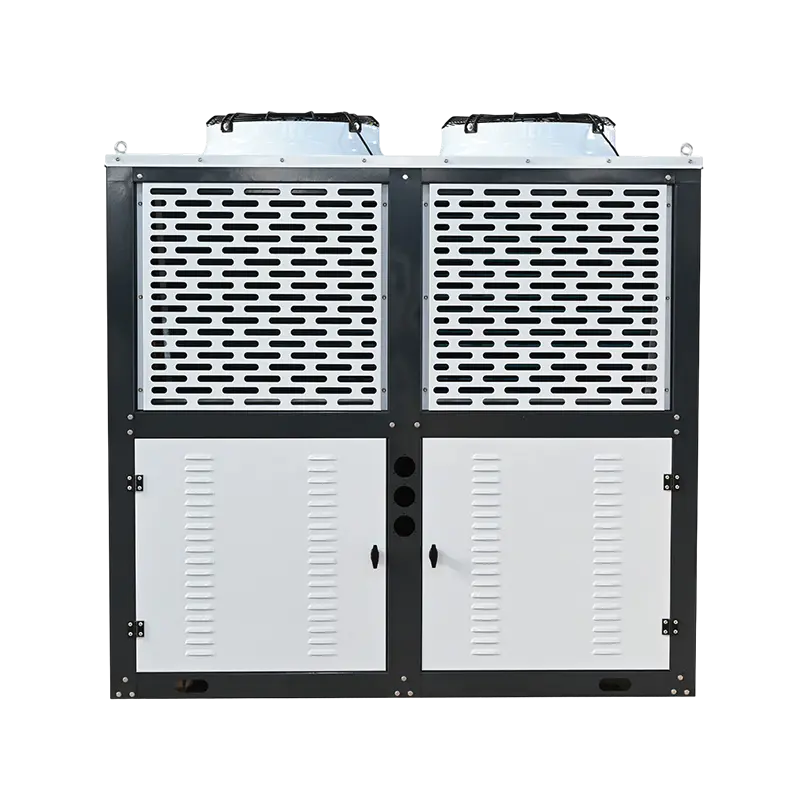
A condensing unit is a factory-assembled package that combines a compressor, condenser coil, condenser fan, receiver, and electrical controls in one enclosure. In most commercial cold room systems, it is the outdoor part of the plant, designed to connect to an evaporator (air cooler) inside the room with an expansion valve between them.
Condensing Unit vs. Condenser: Key Differences
The terms condenser and condensing unit are often mixed up, but the difference matters when you order equipment, compare quotes, or troubleshoot a fault.
- A condenser is a single heat exchanger. Refrigerant vapor flows through the coil, and air or water absorbs the heat. By itself, it cannot operate; it needs a compressor, fan or pump, and controls.
- A condensing unit is an integrated machine. It contains the compressor, condenser coil, fan, receiver, and controls, so it works as the complete high-side package of the system.
- An air-cooled condenser, more precisely, is a condenser that rejects heat to ambient air through fins and forced airflow. An air-cooled condensing unit combines that condenser with a compressor and the supporting hardware.
Core Components of a Condensing Unit
A typical air-cooled condensing unit contains these components:
- Compressor: raises the pressure and temperature of refrigerant vapor so it can condense at ambient temperature.
- Condenser coil: a fin-and-tube heat exchanger where refrigerant vapor releases heat to the air.
- Condenser fan: forces air across the coil; airflow is critical to rated heat rejection.
- Receiver: stores liquid refrigerant and stabilizes the flow to the expansion valve.
- Electrical panel and controls: manage start/stop, defrost coordination, and safety sequencing.
- High/low pressure switches: protect the compressor from unsafe operating conditions.
How Does an Air-Cooled Condensing Unit Work?
An air-cooled condensing unit works on the same vapor-compression cycle used by most commercial refrigeration systems. The unit handles the high-side work, while the evaporator and expansion valve handle the low side.
- The compressor discharges hot, high-pressure refrigerant vapor into the condenser coil.
- The condenser fan draws ambient air through the finned coil, and heat passes from the refrigerant to the air.
- As the vapor cools, it condenses into high-pressure liquid. Cooling it further below the condensing temperature, called subcooling, improves system efficiency.
- Liquid refrigerant flows to the expansion valve, where pressure drops sharply.
- In the evaporator, the cold refrigerant absorbs heat from the cold room and evaporates.
- Refrigerant vapor returns to the compressor, and the cycle repeats.
In an air-cooled condenser, extended fins enlarge the heat exchange surface, allowing a compact coil to reject a large heat load. Coil design, fin spacing, and fan arrangement separate a well-built unit from a marginal one. See our FNH series air-cooled condenser products for construction details.
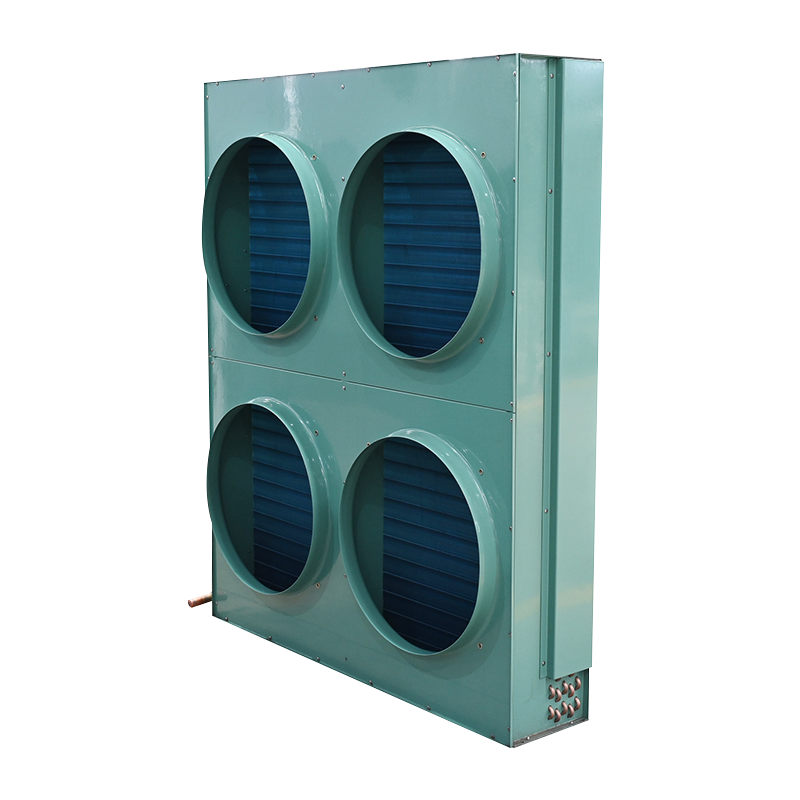 Wholesale FNH Model Series Air-Cooled Condenser Suppliers, Factory - Zhejiang LaZhejiang Lanxi Refrigeration Equipment Co., Ltd is China wholesale FNH Model Series Air-Cooled Condenser suppliers and factory,The FNH mo...View Product →
Ambient temperature directly influences performance. When outdoor temperatures rise, condensing pressure rises, the compressor draws more power, and efficiency drops. The highest expected summer temperature at the installation site should therefore be part of the selection calculation.
Air-Cooled vs. Water-Cooled vs. Evaporative Condensing Units
Not every project should default to air-cooled. The condensing method affects installation cost, energy cost, water dependency, and maintenance routine. The comparison below focuses on site conditions that change a purchasing decision.
Air-Cooled Condensing Units
Air-cooled units reject heat directly to ambient air. Their practical advantages are clear: no cooling tower, no water supply, no water treatment, and lower maintenance. That makes them the default for small and medium cold stores, food processing rooms, and facilities in water-scarce regions.
The trade-off is higher condensing pressure during hot weather, which increases compressor power consumption slightly. They also need clear space around the unit so discharge air does not recirculate into the coil. For most commercial projects, this trade-off is acceptable.
Water-Cooled Condensing Units
Water-cooled condensers transfer heat to water in a tube-in-shell or tube-in-tube heat exchanger. Because water absorbs heat more readily than air, condensing temperatures stay lower, which reduces compressor power draw. Large industrial facilities with high operating hours often benefit most.
The cost sits in the support system: cooling tower, pumps, piping, and water treatment to prevent scaling and biological growth. Where water is scarce or expensive, the energy saving rarely justifies the added complexity.
Evaporative Condensing Units
Evaporative condensers combine air and water cooling. Water is sprayed over the coil while a fan moves air across it, and the heat of vaporization removes a large amount of heat with much less water than a water-cooled system. This gives high efficiency at moderate running cost for medium-to-large cold stores.
The equipment is more complex. It needs water treatment, periodic coil cleaning, and freeze protection in cold climates. When efficiency and footprint matter, it is a proven alternative to water-cooled plants. Explore our evaporative condenser range for medium-to-large cold stores.
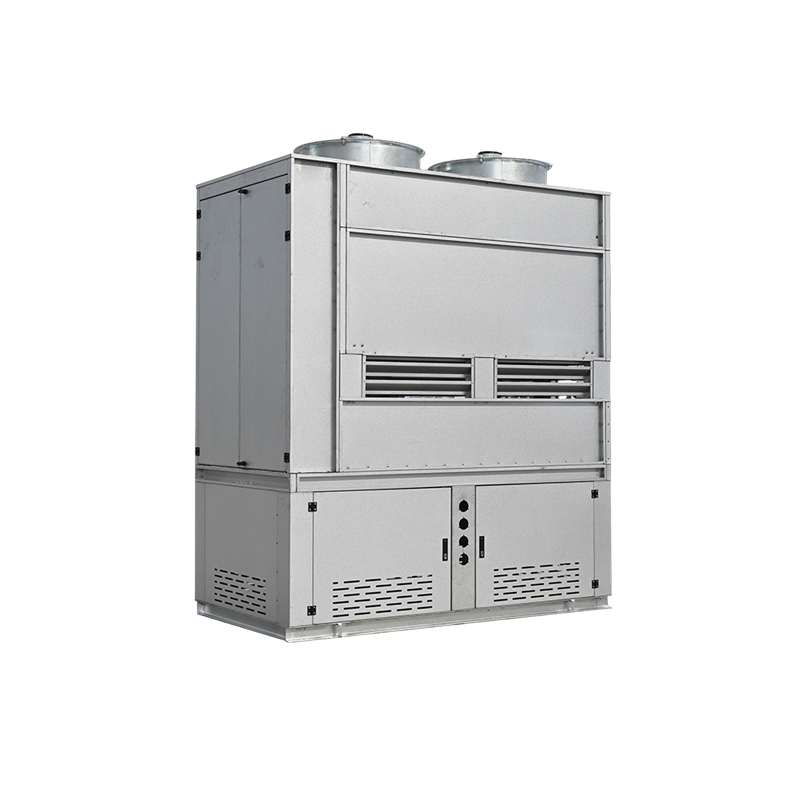 Wholesale Evaporative Condenser Suppliers, FactoryZhejiang Lanxi Refrigeration Equipment Co., Ltd. is China evaporative condenser suppliers and fan motor evaporator factory, offers wholes...View Product →
A practical screening rule: if you are unsure, start with air-cooled. Choose water-cooled when water is reliable, the heat load is large, and annual operating hours are high. Choose evaporative when you want the efficiency of water cooling without the full water consumption of a cooling tower. In water-scarce regions, air-cooled or evaporative is the realistic route.
How to Select the Right Air-Cooled Condensing Unit
Selection is more than matching horsepower to room volume. It is a three-step process: match the temperature range, choose the condensing method, and select a compressor brand with dependable local support.
Step 1: Match the Temperature Range
Compressors are selected for evaporation temperature, not just capacity. A unit designed for high-temperature duty cannot simply run a -18°C freezer; compression ratio, motor cooling, and discharge gas temperature limits are all different. The table below gives the reference ranges used in commercial selection.
| Temperature range | Typical applications | Selection notes |
|---|---|---|
| High temperature (above 0°C) | Fresh produce storage, dairy, some process chilling | Lower compression ratio; dedicated high-temperature compressors improve efficiency. |
| Medium to high temperature (-5°C to 5°C) | Chilled meat, vegetable packing, processing rooms | Balanced capacity; common in food processing lines. |
| Low temperature (-18°C to -25°C) | Frozen food, ice cream, cold chain logistics | Requires low-temperature compressors; higher heat rejection and oil return considerations. |
Step 2: Choose the Condensing Method
Use the comparison in the previous section as the decision tool. For most small and medium projects without unusual constraints, air-cooled is the sensible default. When the heat load is large and water is abundant, or when the site cannot support a large outdoor airflow, water-cooled or evaporative deserves a closer look. Write down the site conditions before moving to brand selection.
Step 3: Select a Reliable Compressor Brand
The compressor is the most expensive single component, and its reliability drives system availability. On Lanxi condensing units, compressors are supplied by internationally recognized manufacturers, including Bitzer, Frascold, Fusheng, Hanbell, Refcomp, and RFC. These brands are widely used across the refrigeration industry, and their service networks and spare parts availability are established market facts.
Unless the project specification names a particular brand, choose the compressor with the strongest local service support and parts availability for your region. After narrowing down your temperature range and cooling method, browse the FNU model series condensers to compare specifications.
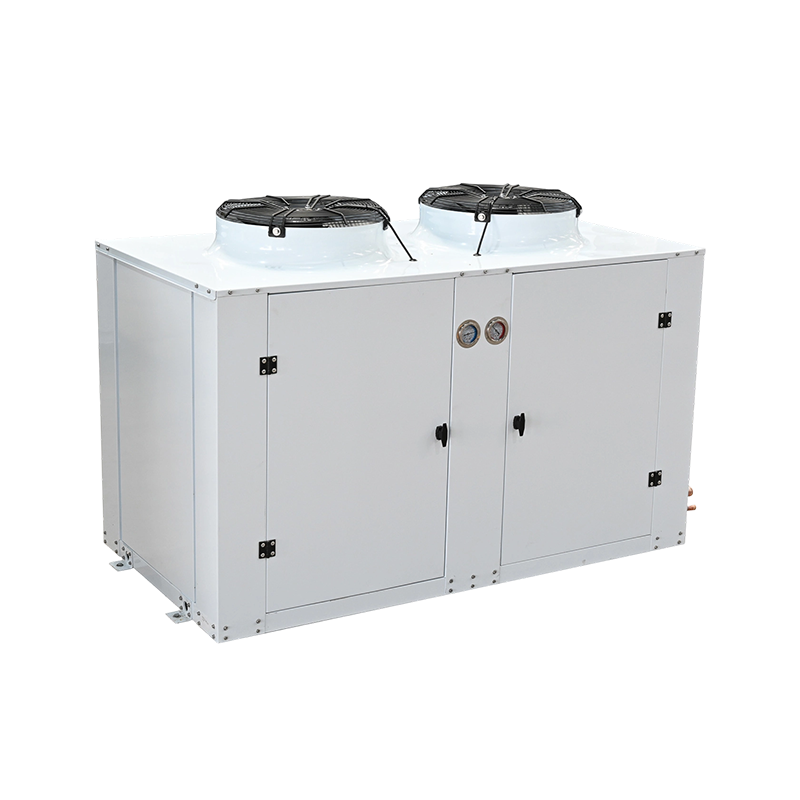 Wholesale FNU Model Series Air-Cooled Condenser Suppliers, Factory - Zhejiang LaZhejiang Lanxi Refrigeration Equipment Co., Ltd is China wholesale FNU Model Series Air-Cooled Condenser suppliers and factory,The FNU Mo...View Product →
Before finalizing the order, run through this checklist:
- Cold room volume and design temperature
- Highest expected ambient temperature at the installation site
- Available space and airflow clearance around the unit
- Water availability and quality if considering water-cooled or evaporative
- First-cost budget versus long-term energy cost
- Preferred compressor brand and local service coverage
Air-Cooled Condensing Unit Maintenance Best Practices
Most air-cooled unit failures come from neglect rather than defective components. Preventive maintenance keeps efficiency high and extends service life.
- Clean the condenser coil regularly. Dust trapped between fins blocks airflow and pushes condensing pressure up; a fouled coil is the most common cause of efficiency loss.
- Check fan motors and blade balance. Worn bearings or loose blades create vibration and reduce airflow.
- Monitor refrigerant pressures. A slowly rising discharge pressure or falling suction pressure often points to a blocked coil, failing fan, or refrigerant leak.
- Inspect electrical connections and contactors. Loose terminals and worn contacts cause intermittent shutdowns.
- Address winter operation in cold climates. Low ambient temperature can cause liquid floodback or low-pressure trips; fan cycling controls or a winter kit prevents this.
Final Thoughts: Match Three Factors, Then Consult the Manufacturer
Selecting an air-cooled condensing unit comes down to three matching decisions: the unit must match the cold room temperature range, the condensing method must fit the site, and the compressor brand must have solid local support. For most commercial and industrial refrigeration projects, an air-cooled unit with an international-brand compressor is a reliable, cost-effective starting point.
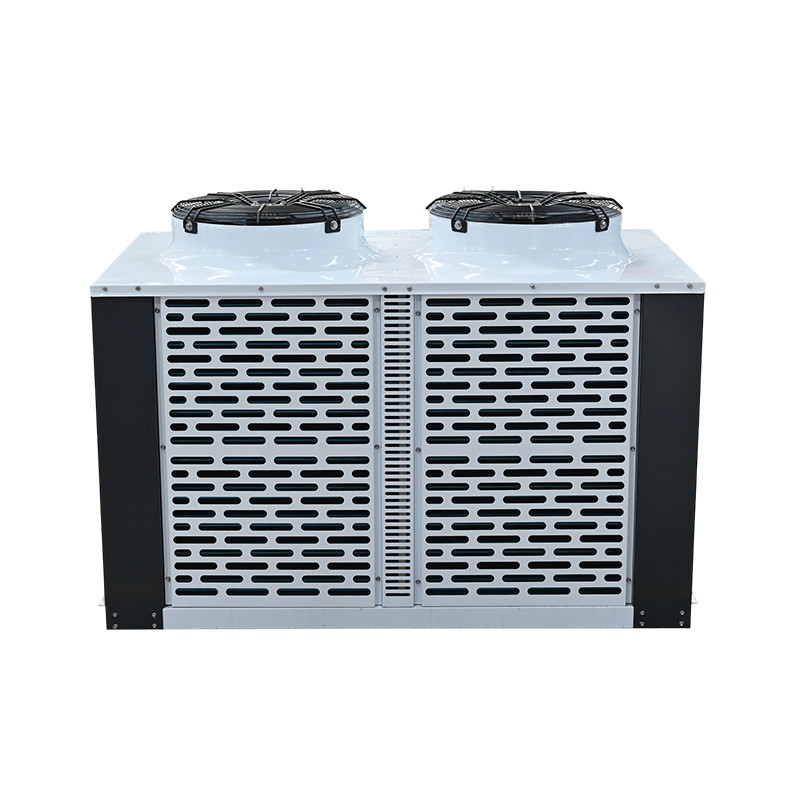
Once those three factors are defined, the list of suitable models narrows quickly, and the specification conversation becomes much easier. Review the air-cooled condenser series and the screw and piston condensing unit ranges on this site, then contact the manufacturer with your project details for a tailored configuration.
-
Lanxi Refrigeration lanzó recientemente sus unidades de tornillo modulares "Serie Polaris", que p...
READ MORE -
Lanxi Refrigeration se ha asociado con un instituto alemán de investigación energética para estab...
READ MORE -
Qué hacen realmente las tecnologías de condensadores enfriados por aire y enfriadores de aire ...
READ MORE -
Los enfriadores de aire industriales son la solución de refrigeración más rentable para espaci...
READ MORE -
Las unidades de refrigeración por aire utilizan el aire como refrigerante Una unidad de ...
READ MORE -
El mandato operativo del condensador enfriado por aire un condensador enfriad...
READ MORE

- Correo electrónico: [email protected]
- Teléfono: +86-15258555916
- Dirección: 301 Punan Avenue, Pukou Street, ciudad de Shengzhou, ciudad de Shaoxing, provincia de Zhejiang, China
Derechos de autor © Zhejiang Lanxi Refrigeration Equipment Co., Ltd. Todos los derechos reservados.
浙ICP备2022034605号-1
 Fabricantes de equipos de refrigeración personalizados
